
- Your cart is empty
- Continue shopping
Shop
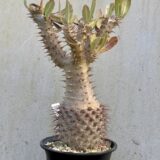
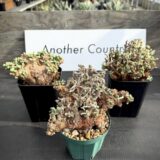
Euphorbia clavifolia
$85.00
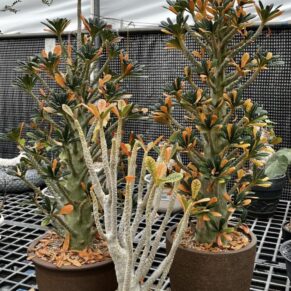
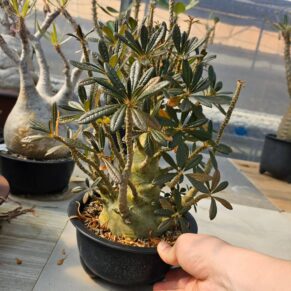
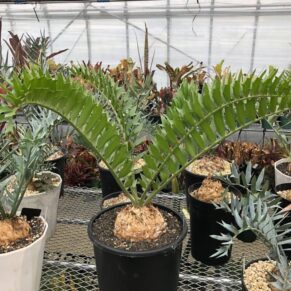
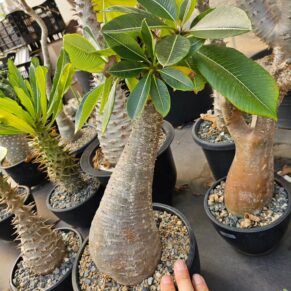
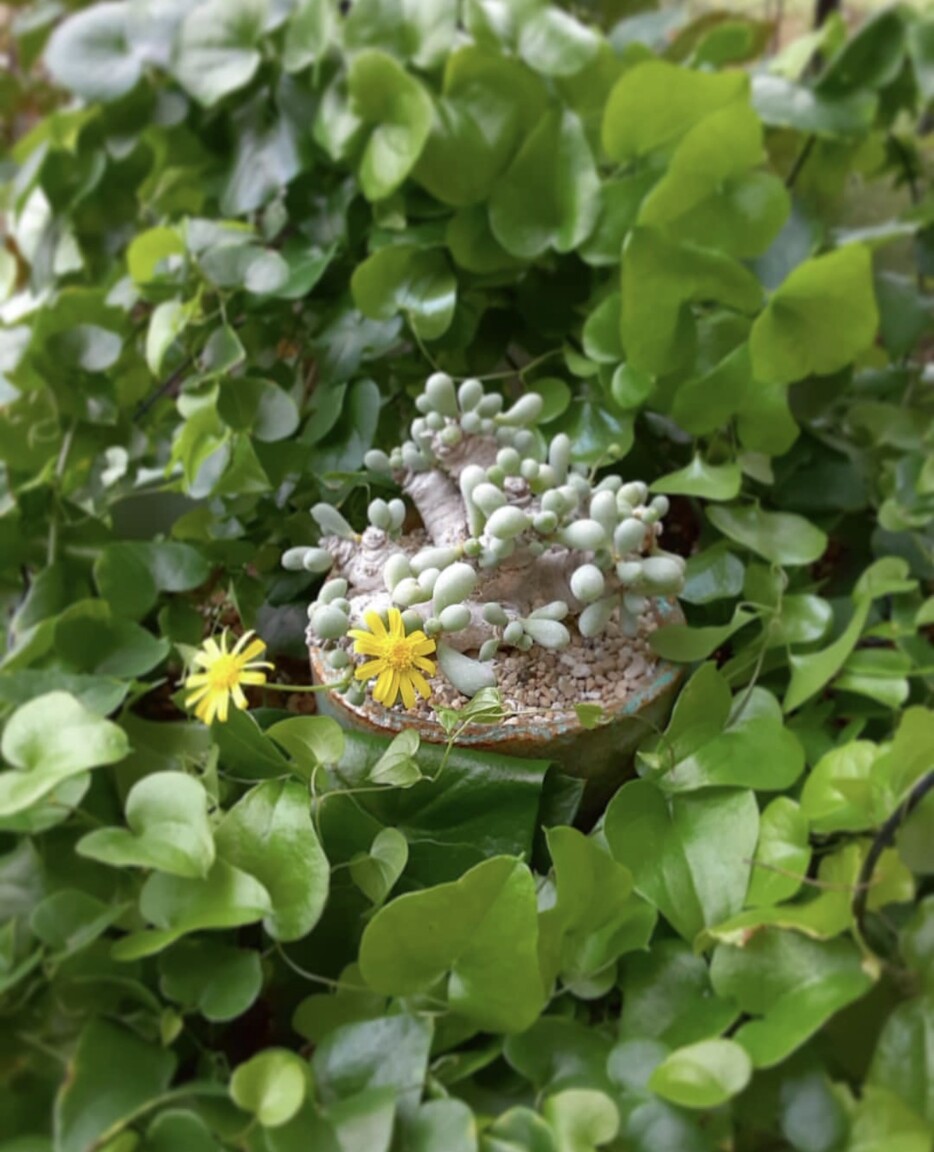
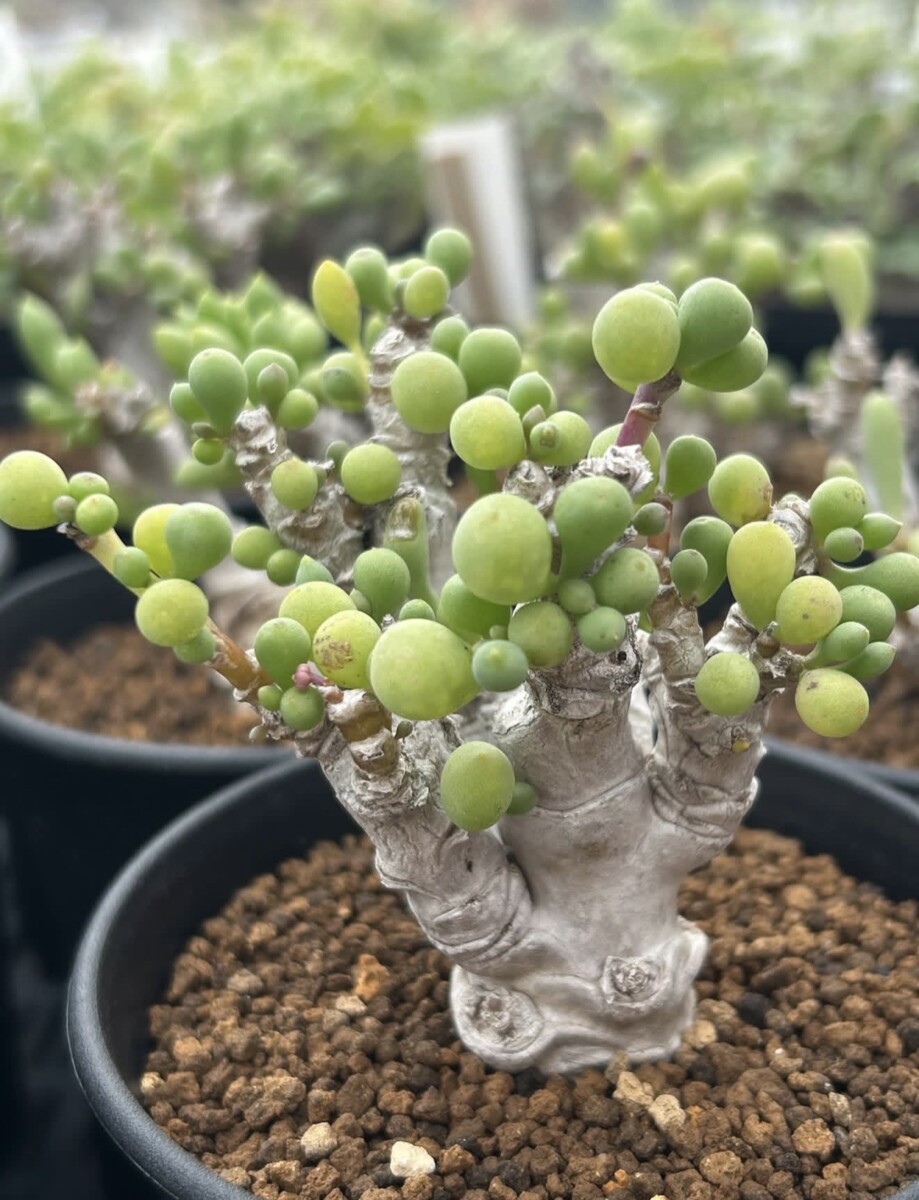
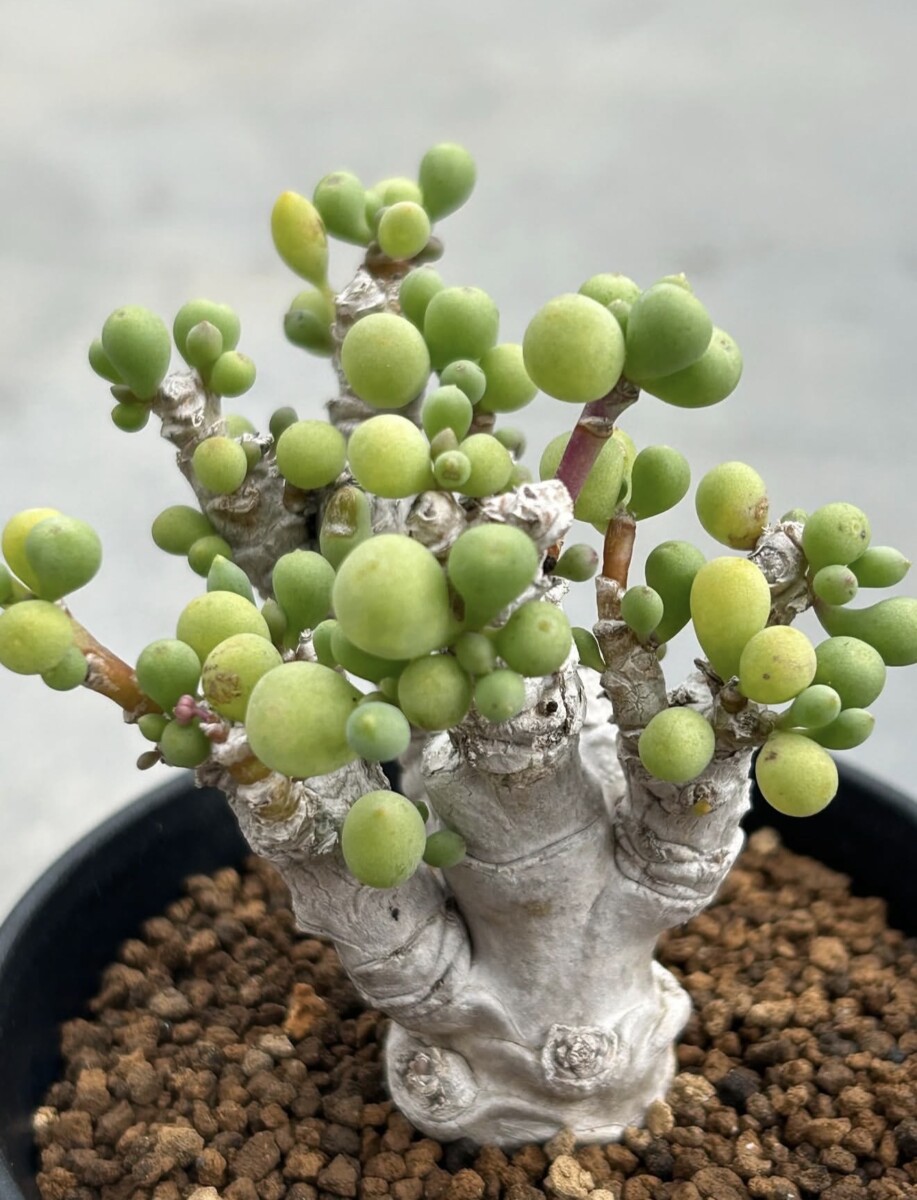
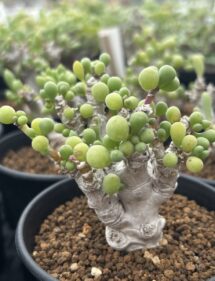
Euphorbia clavifolia is a rare, sculptural succulent admired for its compact cushion form and remarkable resilience. Native to the rocky slopes of southern Africa, this dwarf euphorbia thrives in bright sunlight, well-drained soil, and dry conditions. Its club-shaped stems and tuberculate texture give it a unique, artistic look — perfect for rock gardens, minimalist décor, or collectors seeking distinctive succulents.
Growing Euphorbia clavifolia is simple with proper care: provide full sun, minimal watering, and a gritty soil mix. The plant’s slow-growing cushion habit rewards patience, forming dense mounds that blend beautifully with other drought-tolerant plants. Its yellow-green flowers, small and subtle, add delicate charm during blooming season.
This rare euphorbia symbolizes endurance and natural beauty, making it a statement piece in any garden or indoor collection. Handle with care — like all euphorbias, it contains a milky latex sap that can be irritating. With the right balance of light, air, and restraint in watering, Euphorbia clavifolia will thrive for years as a living sculpture of resilience and elegance.
Availability:15 in stock
Add to cart
Buy Now
Euphorbia Clavifolia – In‐Depth Guide
Welcome to your comprehensive guide to euphorbia clavifolia, a succulent marvel that has captured the imagination of plant lovers, collectors and gardeners worldwide. In this detailed article, we will explore everything you need to know: its taxonomy, natural habitat, appearance, cultivation, propagation, benefits, design uses, common problems, and how to make it thrive in your own space. Whether you are a novice or an experienced succulent enthusiast, this guide will empower you to successfully grow and appreciate Euphorbia clavifolia.Join facebook group
Introduction to Euphorbia Clavifolia
Though some references still use names like Euphorbia clavarioides, the plant we are considering under the keyword euphorbia clavifolia belongs to the genus Euphorbia, one of the most diverse and fascinating groups of succulent plants. While strictly speaking “clavifolia” may refer to a different species or variant in some databases, the interest in this term reflects the broader appeal of similar cushion-type Euphorbias from southern Africa. Using “euphorbia clavifolia” as a search and keyword focus helps capture the interest of enthusiasts and collectors seeking this uncommon, striking plant.
Euphorbias are known for their often dramatic forms, unusual growth habits, and the white milky latex they exude when cut or damaged. This latex is often toxic or irritating, so handling care is required. The interest in this plant stems from a combination of its unique morphology (often cushion- or club-shaped branches/tips), its hardy drought-adapted nature, and its suitability for succulent collections and rock gardens.
Taxonomy & Naming
Understanding the botanical context helps appreciate why this plant is unique. The genus Euphorbia comprises hundreds of species, many of which are succulent or semi-succulent. The specific epithet “clavifolia” (or “clavarioides” in related forms) is derived from Latin: “clava” meaning club, and “folia” meaning leaves (or more broadly “with club-shaped leaves/branches”). So the name literally suggests branches or leaf-structures shaped like a club or mass.
In many sources you will see the related species Euphorbia clavarioides (Boiss.) described. For example, World Flora Online describes it as a dwarf, glabrous succulent up to about 50 mm high, forming a dense cushion up to 1.0 m diameter. The name “clavarioides” means “like Clavaria”, referring to fruiting fungal bodies, a reference to its dense tufted appearance. Llifle
While “clavifolia” may not always be the formally accepted name in all databases, in the succulent collecting community the keyword “euphorbia clavifolia” is often used to refer to similar forms or variants with club-shaped leaf or branch structures. Thus using this keyword on your website will help attract searches from plant collectors using that term, and you can structure the content to encompass closely related species while making clear any taxonomic clarifications.
Natural Habitat & Distribution
In its natural environment, plants similar to Euphorbia clavarioides (and by extension forms sought under the clavifolia keyword) are native to southern Africa – including regions such as the Eastern Cape, Northern Cape, Western Cape, KwaZulu-Natal, and Lesotho. They typically grow in dry, rocky, or stony slopes, often in full sun, with exceptional drainage and limited competition. The altitudes can vary but many are adapted to somewhat elevated terrain, for example 1,500 – 1,800 m above sea level.
Because of these habitat conditions, the plant has evolved traits such as a buried main stem (caudex), tuberculate branches, minimal leaves, and a growth pattern that enables survival through periods of drought and extreme temperature fluctuations. These traits make it both fascinating and rewarding for cultivation, but also mean that replicating its natural conditions is key for success.
Description: Appearance & Growth Habit
When discussing Euphorbia clavifolia in a cultivation context, you’ll often emphasize its distinctive and compact form. Below is a breakdown of its typical features:
-
Size & habit: Often described as dwarf or low-growing. For example, E. clavarioides forms a cushion up to about 50 mm (5 cm) high, and can spread out to 0.15-1.0 m diameter. The “clavifolia” keyword variant may refer to similar sized succulents, so you should emphasize compactness.
-
Body & stems: The plant often has a subterranean main stem or thick rootstock (caudex). From this the emergent branches radiate and form the visible above-ground cushion. The branches are short, cylindrical or club shaped (clavate), tuberculate (covered with small protrusions), and spineless.
-
Leaves: Leaves, if present, are often rudimentary and deciduous. In many species they fall early. For example E. clavarioides has leaf-rudiments 1-2 × ±1 mm.
-
Flowers & fruits: The inflorescences in Euphorbia are called cyathia (a cluster of reduced male and female flowers inside a cup-like structure). In E. clavarioides the cyathia are sessile (no peduncle) and about 5–6 mm in diameter; glands are yellow or greenish-yellow. The fruits are capsules, glabrous, about 6-7 mm in diameter.
-
Coloration & texture: The surface may appear grey-green to green, sometimes more brownish at exposed tips; the tubercles provide a textured, sculptural look. As the plant ages, outer branches may become partly buried or covered by debris or soil, giving a “stone-like” embedded appearance.
-
Growth rate & longevity: These plants tend to be slow-growing but long-lived when in appropriate conditions. They reward patience by forming stable, dense cushions over years.
Why “Euphorbia Clavifolia” is in Demand
There are several reasons collectors and pet succulent growers seek out forms labelled “euphorbia clavifolia”:
-
Architectural form: The compact, cushion or club-shaped branching habit gives the plant a sculptural and almost alien aesthetic that stands out in a collection.
-
Drought/rock garden suitability: Because of its native habitat, it is very well suited to dry succulent gardens, rock gardens, or container culture with minimal maintenance.
-
Rarity and interest: Some of these species or variants are less common, making them desirable among enthusiasts seeking something unusual beyond commonly available succulents.
-
Educational/value in cultivation: Because the plant has specialized needs (excellent drainage, minimal water, strong light, good ventilation), growers enjoy the challenge and learning involved.
-
Keyword interest: Many people search for “euphorbia clavifolia” specifically due to the appealing name and novelty, so using that keyword helps drive search traffic for websites offering information, plants or accessories related to it.
Cultivation Guide for Euphorbia Clavifolia
To successfully grow this plant (and satisfy the expectations of collectors using the “euphorbia clavifolia” keyword), you’ll want to follow best-practice cultivation guidelines that mimic its natural conditions. Below is a comprehensive care guide.
1. Light and Location
-
Aim for bright direct sunlight for several hours per day. In its native habitat the plant receives full sun on rocky slopes and flats.
-
If grown indoors or under partial shade, ensure it receives as much bright light as possible. Poor light may cause stretching, loss of compact form, or weak growth.
-
If transitioning from lower light to full sun, harden off gradually to avoid sunburn. Similar species (e.g., E. clavarioides) tolerate moderate shade but will thrive in strong light
2. Substrate & Drainage
-
Excellent drainage is paramount. Use a very mineral-rich, well-draining mix: e.g., coarse sand, pumice, or gravel combined with cactus/succulent soil or minimal organic matter.
-
Avoid waterlogging and heavy soils which can cause root rot. As one source notes for E. clavarioides: “it does best in a mineral soil, good drainage is essential.” L
-
A deeper pot may be needed to accommodate the tap-root or fleshy rootstock, keeping the plant stable and preventing tipping. Llifle
3. Watering
-
During the growing season (spring to autumn for many succulents), water when the substrate is fully dry. Allow the plant to experience a “dry-period” before watering again.
-
In winter or dormancy, water very sparingly or keep nearly dry, depending on how cool the environment is. Over-watering during cool periods is a common cause of failure.
-
Because these plants are adapted for arid regions, they prefer being slightly under-watered rather than over-watered.
4. Temperature & Humidity
-
They prefer warm, dry conditions. Avoid high humidity, which increases the risk of rot and fungal problems.
-
Some related species can tolerate brief cold spells but generally stay above freezing; it’s safer for these plants to be kept at moderate temperatures and protected from frost.
-
Good air-circulation is beneficial to prevent fungal issues and keep the plant healthy.
5. Potting & Repotting
-
Use a pot with excellent drainage and sufficient size to accommodate growth; allow some room for the rootstock to develop.
-
When repotting, be careful with the roots and rootstock. Allow any wounds to dry and heal before watering again, to reduce the chance of rot.
-
As noted for E. clavarioides: “If you remove an offset, remember to let it dry for a week or so, letting the wound heal.”
-
It’s generally not necessary to repot every year; these plants grow slowly, so repotting every 2-4 years or when you see signs of crowding or rootbound condition is sufficient.
6. Propagation
-
By seed: Sow seeds in a very well-draining mix, keep lightly moist (not wet), and provide bright light. Germination may take time, and seedlings grow slowly.
-
By cuttings/offsets: If the plant produces offsets or heads, you can separate them. Let the cut heal/dry (callus) before planting. Use a clean, sharp tool, and let latex bleed out and dry before handling. Then plant into a dry, well-draining substrate and wait for roots.
-
Always handle with care because the latex is irritating.
7. Common Problems & Troubleshooting
-
Over-watering/poor drainage: This is the most common issue. Leads to root rot, soft or collapsing growth, discoloration. Remedy: repot into drier, more mineral substrate; reduce watering; ensure pot drains freely.
-
Insufficient light: Causes etiolation (stretching), weaker form, loss of the distinctive compact shape. Remedy: move to brighter light gradually.
-
Sunburn: If moved too quickly into strong sun, plants may scorch or bleach. Remedy: acclimate gradually.
-
Latex contact: When cutting or handling, avoid contact with skin or eyes; the sap can irritate and should be washed off immediately.
-
Pests: While robust, succulents can attract cochineal, mealybugs, or scale. Check regularly and treat early. Good light, airflow and dryness help prevent pests.
8. Design Uses & Display
-
Because of its sculptural, compact growth habit, Euphorbia clavifolia is ideal for rock gardens, succulent bowls, bonsai-style containers, and alpine-style displays.
-
You can use it as a feature plant — its unique form draws attention and serves as a focal point among other succulents.
-
It pairs well with other drought-adapted plants: small agaves, lithops, other dwarf euphorbias, sedums, sedum-type groundcovers. The key is contrast: texture, height, color.
-
Use a shallow, wide container with open space around for the cushion form to spread out. Surround it with gravel or small pebbles for a naturalistic effect and better drainage.
-
Because it stays low, you can use it in the front of a rockery, edging of a succulent bed, or on a patio pot where it receives full sun.
Why Your Website Should Feature “Euphorbia Clavifolia”
Since “euphorbia clavifolia” is a keyword of interest, especially among succulent enthusiasts, collectors and gardeners looking for unique plants, having a dedicated, optimized, in-depth page on your website will offer multiple benefits:
-
Search engine interest: People searching for this exact phrase expect specific information — descriptions, photos, care instructions, where to buy, how to propagate. A long-form article (3000+ words) gives you an opportunity to cover all bases and satisfy search intent.
-
Authority & trust: Providing comprehensive, well-structured, accurate information builds credibility with your visitors and with search engines.
-
User engagement: With plenty of useful content (care guide, propagation tips, design suggestions, troubleshooting), visitors will stay longer, explore more, return for reference.
-
Monetization or conversion potential: If your site offers this plant for sale, or offers related substrate, pots, cuttings, or consulting, a full page can support conversion. Even if you don’t sell, it can be a referral or affiliate page.
-
Differentiation: Many general succulent pages cover common species; focusing on “euphorbia clavifolia” gives you a niche advantage and attracts targeted traffic.
-
Educational value: Many succulent hobbyists love learning about species, variants, taxonomy, habitat — which increases the likelihood of share-ability, back-links from blogs/forums, social media mentions.
Structuring the Website Page
To make the large article easy to read and navigate, consider breaking it into logical sections with sub-headings, images, and perhaps side-bars or call-out boxes. Suggested structure:
-
Introduction – Why Euphorbia Clavifolia is fascinating
-
Taxonomy & Naming Clarification (including discussion of clavarioides, clavifolia, and variants)
-
Natural Habitat & Distribution
-
Description & Key Features (size, body, stems, leaves, flowers)
-
Cultivation Guide – Light, Substrate, Watering, Temperature, Potting, Propagation
-
Troubleshooting & Common Problems
-
Design & Display Ideas – Where to use it, companion plants, creative displays
-
Collector Notes – rarity, sourcing, what to watch for
-
Safety & Handling – latex toxicity, caution, best handling practices
-
FAQs (for example: “Is euphorbia clavifolia difficult to grow?”, “How fast does it grow?”, “Where can I buy seeds/cuttings?”, “What are its synonyms?”)
-
Summary & Final Thoughts – Encouragement for growth, appreciation of the plant
-
Call to Action – invite the user to browse your plants/supplies/newsletter/social media etc.
Within each section you can include photos and if available video links (though you said no external links, so you might embed your own images). Use the keyword euphorbia clavifolia naturally but avoid over-stuffing; include relevant synonyms like “Euphorbia clavarioides” or “dwarf cushion euphorbia” for variety and semantic coverage.
Keywords & SEO Considerations
-
Primary keyword: euphorbia clavifolia
-
Secondary/related keywords: Euphorbia clavarioides, dwarf euphorbia, cushion euphorbia, succulent club-shaped branches, rock garden succulent, rare euphorbia species
-
Long-tail keywords: how to grow euphorbia clavifolia, care euphorbia clavifolia, propagation euphorbia clavifolia, buy euphorbia clavifolia seeds, display euphorbia clavifolia in rock garden
-
Use the primary keyword in the page title, meta description (as above), first paragraph, sub-headings, alt text for images, and in one or two natural internal mentions (if your site has related pages) but avoid keyword-stuffing.
Detailed Care and Culture Insights
Here are some additional nuanced insights you can include to make your content deeper and more helpful.
-
Dormancy and rest periods: Many succulents from arid habitats have a slower growth phase (often during the cooler months) or a rest phase. During this time, watering should be reduced and fertilizer withheld.
-
Fertilizing: Use a weak, balanced succulent fertilizer during the active growing season (spring/early summer) no more than once or twice. Avoid fertilizing during hot or dry inactive periods to prevent stress.
-
Acclimation: When moving plant from indoor to outdoor full sun (or from shade to sun) do so gradually over 1-2 weeks to avoid shock or sunburn. Similarly when moving indoors for winter protection.
-
Signs of healthy growth: Compact shape, tubercles visible and firm, no black or soft spots, new branch tips developing, natural cushion expansion.
-
Signs of stress: Soft or mushy stems (rot), overly stretching stems (lack of light), bleaching or white spots (sunburn), brown dry tips (under-watering or heat stress)
-
Landscape integration: In outdoor warm climates (and provided frost protection), you can plant in rockeries or gravel gardens using native-style soils, with ample sun and minimal water. In containers, ensure the pot is shallow but wide, with coarse top dressing to mimic arid habitat.
-
Winter protection: If you live in a climate with frost or heavy rainfall, it’s ideal to bring the plant under shelter or use a cold frame / greenhouse. Even if outdoors, ensure it’s planted on a slope or in raised bed to avoid water sitting around the rootstock.
-
Propagation tips: When using seeds, keep them in a warm, bright location, lightly mist (not drench) until tiny seedlings appear, then gradually reduce humidity. For cuttings, after callus formation place into lightly moist mineral substrate and wait for roots before watering lightly.
-
Handling the latex: When cutting or separating stems/offsets, always wear gloves and protective eyewear if possible. Rinse hands and tools after handling. Keep children and pets away.
-
Ethical sourcing: Because some succulent species are collected illegally and wild populations may be threatened, always source from reputable growers or nurseries that propagate plants rather than collect wild specimens. Educate visitors about conservation ethics and legalities.
-
Highlighting rare variants: If your site offers or displays variants of euphorbias (for example with unusual colors, mutant forms, crests, etc), a section on “variants and cultivars” could be appealing. For example E. clavarioides var. truncata is a known variant. Llifle
-
Photography and presentation: Good high-resolution photos showing growth habit, cushion form, tubercules close-up, flowering cyathia, and rootstock detail will help visitors appreciate the plant. You may also include before/after growth timelines to show slow but rewarding progress.
-
Reader engagement: Encourage your visitors to send in their own photos of euphorbia clavifolia, share growing tips, ask questions in comments or a forum. This builds community and repeat visits.
Collector & Sourcing Notes
-
Because of its slow growth and unique appearance, plants labelled as “euphorbia clavifolia” may command a premium among collectors. You can include a caution: check that the plant is healthy, has good tubercule development, no rot or pest damage, and is true to form (compact cushion).
-
Warning: some plants offered may be mislabeled, or hybrids/related species sold under the name. Provide guidance on how to verify authenticity: check for the key features (dense cushion, club-shaped branches, tubercules, spineless).
-
For seeds: if you offer seeds or links to seed sources (without linking externally on this page), you could mention that “a batch of 50 seeds may take 2–3 years to display full cushion habit; germination and growth are slow” to set expectations.
-
Consider providing a table of approximate price ranges or rarity categories (if relevant) so a visitor knows what to expect when sourcing the plant.
Safety, Legal & Conservation Notes
-
Remind readers that all euphorbias exude a milky latex that can be poisonous or skin-irritating. Children and pets should not be allowed to chew or ingest plant material. After any contact with sap, wash hands thoroughly and avoid touching face/eyes.
-
If your region has legislation concerning import/export of succulents, mention that some species may be regulated (e.g., under CITES), and buyers should check local requirements.
-
Encourage sustainable propagation and discourage wild-collection. Some succulent habitats are under threat from over-harvesting and climate change; being a responsible collector means favouring nursery-grown plants rather than wild-taken ones.
FAQs (Frequently Asked Questions)
Q: Is Euphorbia Clavifolia difficult to grow?
A: Not necessarily—but it does require good drainage, bright light, and dry conditions. If you replicate its native habitat (dry, rocky slopes, full sun), it rewards the grower with a sculptural, compact form. Avoid over-watering and poor substrate.
Q: How fast does it grow?
A: These are relatively slow-growing succulents. From seed or small plants you may only observe noticeable growth over a year or two. With time and correct conditions, the cushion may slowly expand.
Q: Can I grow it indoors?
A: Yes—with caution. Indoors you’ll need a very bright spot (south-facing window if in the northern hemisphere), excellent substrate and low humidity. Consider giving supplementary light if natural light is insufficient. Outdoor or greenhouse culture is usually easier.
Q: How do I know if I’ve got the correct species labelled euphorbia clavifolia?
A: Check for the distinct features: very low mound (a few centimetres high), dense club-shaped/tuberculate branches, spineless, and the plant forming a cushion rather than tall stems. Photos online of bona fide forms (look up E. clavarioides images) will help you compare. Beware of larger or taller euphorbias labelled similarly.
Q: When does it flower?
A: The cyathia appear at the tips of the branches; for E. clavarioides, flowering time is around Oct-Jan (southern hemisphere) in its native range.In cultivation you may see flowering when the plant is healthy and well-lit.
Q: Why is it called a “cushion” euphorbia?
A: Because the branches crowd together and form a low mound or cushion shape above the ground, partially hiding the main stem or caudex beneath. This growth form helps the plant protect itself in its native harsh, exposed environment.
Summary & Final Thoughts
In summary, if you’re looking to create a page or offering dedicated to euphorbia clavifolia, you’re tapping into an elegant niche of succulent cultivation. The appeal of this plant lies in its sculptural form, drought-adapted nature, collector-friendly rarity, and the satisfaction of growing something slightly uncommon and striking. By guiding your readers through taxonomy, natural history, appearance, cultivation, design usage, sourcing, and safety considerations, you offer value that searchers will appreciate and trust.
As you build your content, remember to write with clarity, break up large blocks of text with headings, use high-quality images (showing the plant in different stages, close-ups, and design settings), include alt text with your focus keyword (“euphorbia clavifolia”), and keep it engaging and readable.
Encourage your visitors to share photos of their own specimens, ask questions, and subscribe to updates — this helps build community and return visits. Use real-life anecdotes (if you have any) about how the plant performed in your collection, mistakes you made and how you fixed them — this adds authenticity and value.
Finally, remind your audience that success with this plant is achievable if they respect its natural habitat: bright light, excellent drainage, minimal water, and patience. In return, they will enjoy a stable, long-lived, striking succulent that stands out.
Thank you for reading this comprehensive guide. Here’s to your successful cultivation of Euphorbia Clavifolia — may it thrive, inspire, and bring joy to your collection.