- Your cart is empty
- Continue shopping
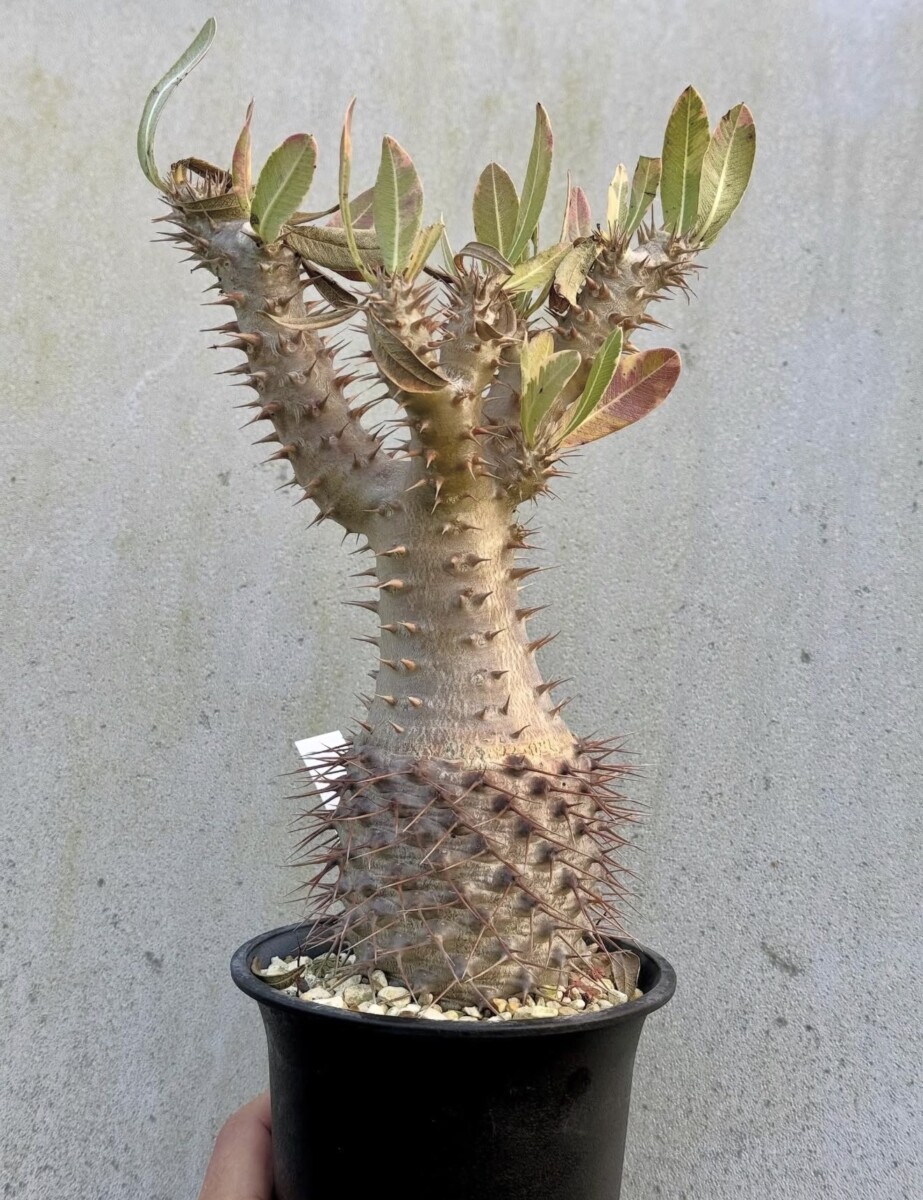
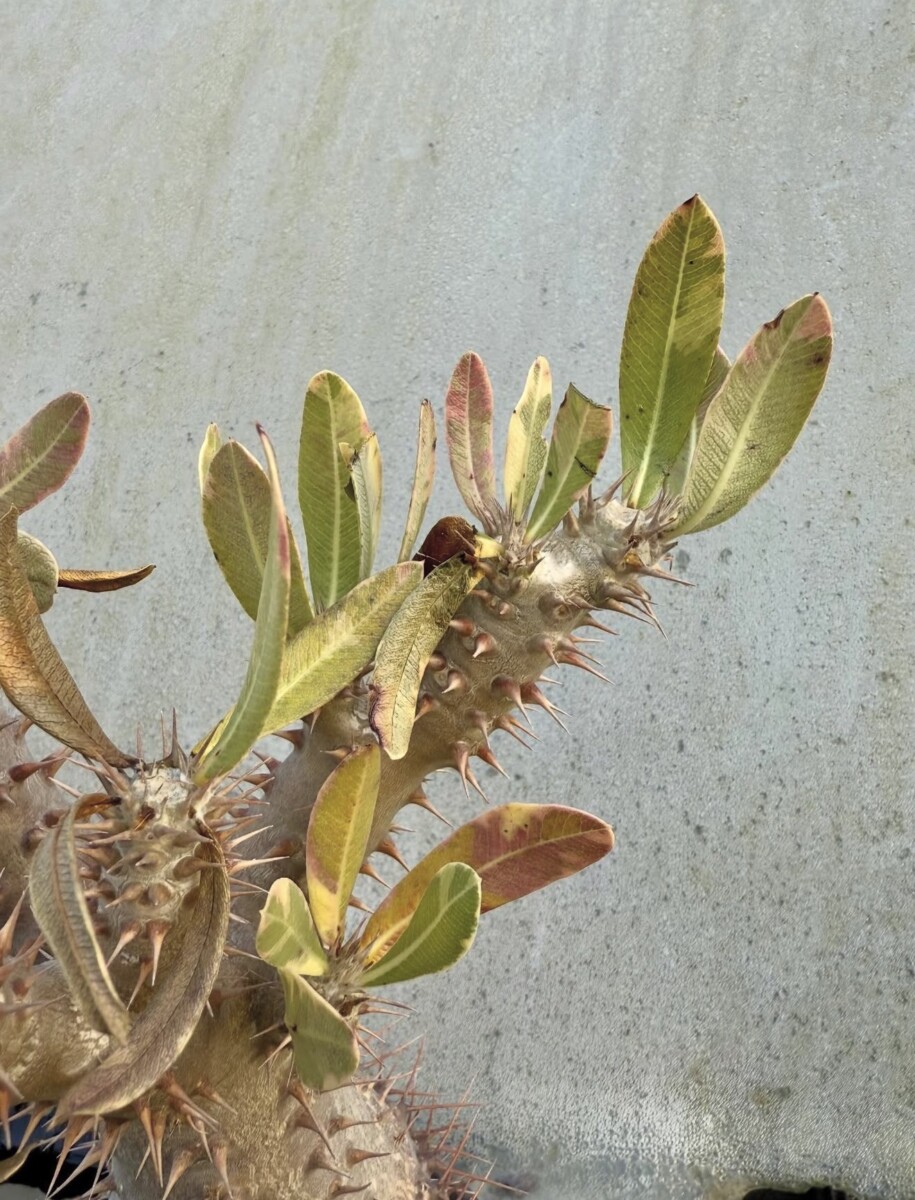
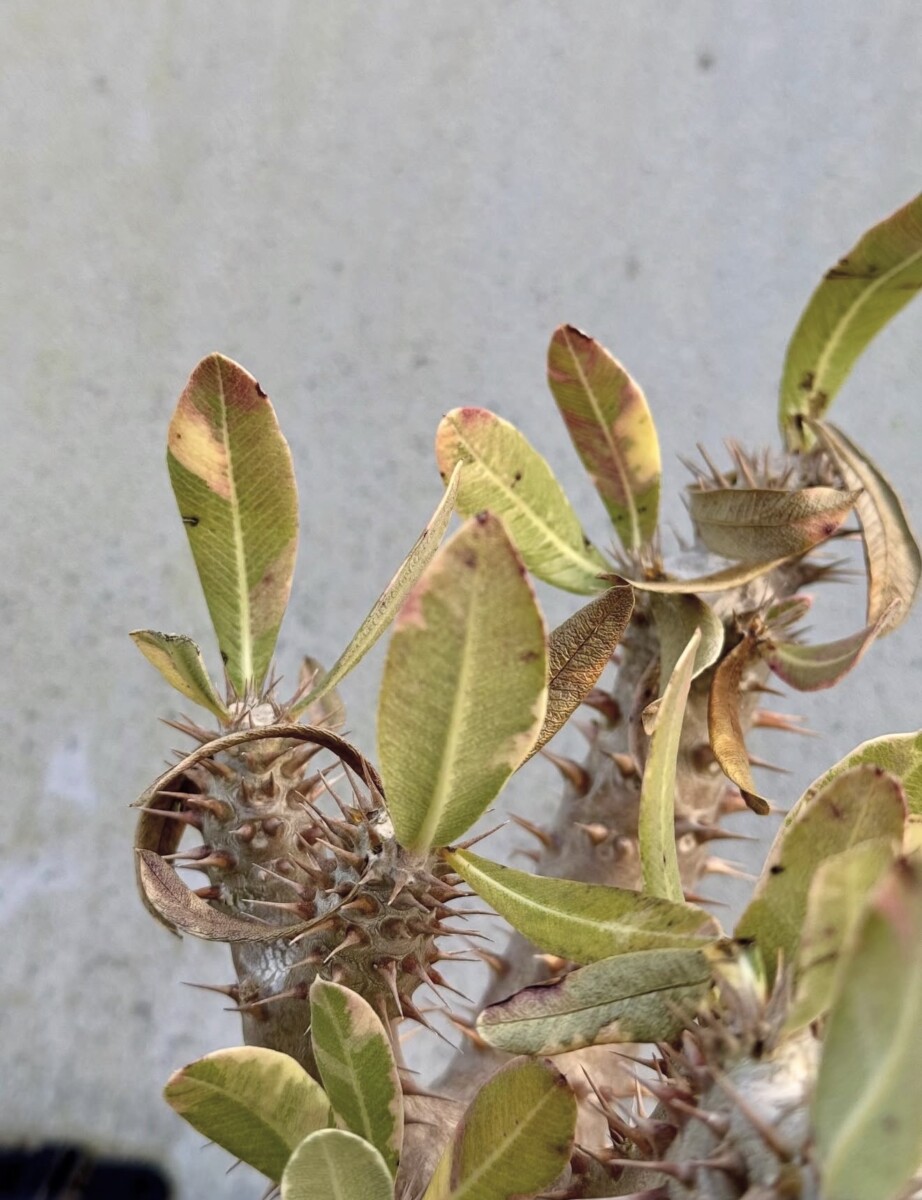
Pachypodium horombense
Discover the Majestic Pachypodium horombense: Nature’s Sculptural Wonder
The remarkable Pachypodium horombense is a truly inspiring plant — sculptural, resilient, and elegant. Endemic to the rugged landscapes of Madagascar, this succulent shrublet features a thick, water-storing trunk (or caudex), spiny branches, glossy leaves and bright yellow trumpet-shaped flowers. For those who love rare, beautiful, and hardy plants, Pachypodium horombense ranks among the most rewarding choices.Join facebook group
In this full-length guide we’ll explore every intriguing facet of Pachypodium horombense: its natural habitat, botanical characteristics, cultivation and care (soil, light, water, propagation), ideal settings, potential pitfalls and how to enjoy it as a cherished specimen in your own collection. Whether you’re a seasoned succulent collector or a curious newcomer, reading on will give you a deep and enthusiastic understanding of this extraordinary plant.shop other caudexplants here
1. Natural Origin and Habitat
Pachypodium horombense is native to the Horombe Plateau of southern central Madagascar.In its wild environment it grows on granite outcrops or fissured rock faces, at altitudes ranging from roughly 500 m to 1,000 m above sea level.
The environment is dry, sun-baked, and with long dry seasons. For example, some populations experience around seven dry months per year.
Because of these demanding conditions, Pachypodium horombense has evolved a thick caudex for water storage, spiny branches for protection and reduced leaf area during drought periods.shop other plants like pachypodium gracilius
2. Botanical Description – What Makes It So Stunning
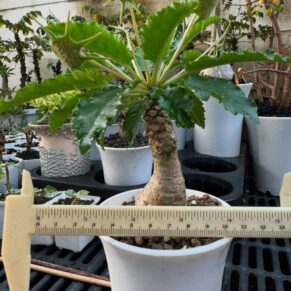
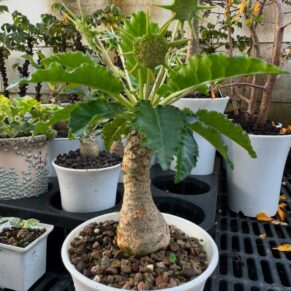
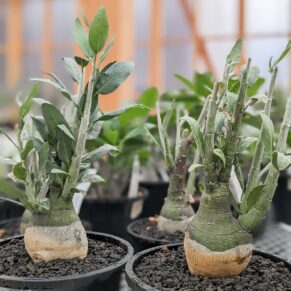
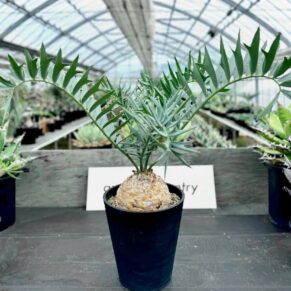
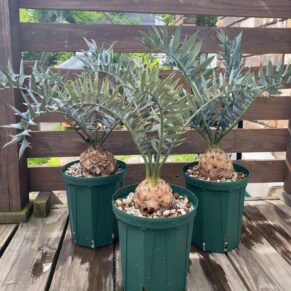
Form & Caudex: The central trunk of Pachypodium horombense is often described as bottle-shaped or tuberous. In mature plants the caudex may reach 50-70 cm in diameter, with a trunk diameter of around 20-30 cm being not uncommon. Branching occurs near the base, producing multiple short arms or fat spiny branches.
Branches & Spines: The branches (branchlets) measure roughly 20-40 cm long, are 6-20 mm in diameter and are covered with paired straight spines (3-10 mm long).
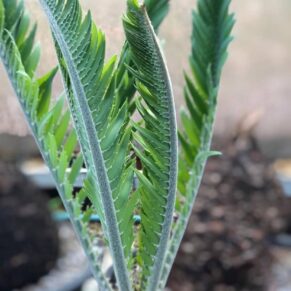
Leaves: Leaves are arranged in rosettes at the tips of branches. They are thick, stiff, elliptic to narrowly oblong in shape, measuring about 25-80 mm long and 5-20 mm wide in many plants. The upper surface is deep green and glossy with a pale mid-vein; the underside is often whiteish felted. The leaves are deciduous during the cooler dry season.Flowers: One of the most captivating features: Pachypodium horombense bears an upright, pubescent flower stalk (peduncle) up to 10-60 cm tall, carrying 3-11 broadly cup-shaped yellow flowers (17-23 mm in diameter for the tube) in many specimens. The corolla is bright yellow, the tube often ovoid, and the lobes obovate. The design is adapted to attract pollinators.
Fruit & Seeds: After flowering, fruit pods may form (example: roughly 14 cm long by 7 mm wide in some wild forms).
Distinctive Colour & Texture: The bark is smooth, grey-green and shiny, giving the plant a sculptural quality. Combined with its spines and architectural trunk, this makes it a show-piece succulent.
3. Why Pachypodium horombense Is So Popular Among Collectors
There are many reasons this species draws enthusiastic admirers:
-
Striking appearance: Its thick trunk, spiny arms, glossy leaves and bright flowers make it visually stunning and sculptural.
-
Compact size: While some succulent trees grow huge, Pachypodium horombense remains manageable (often under 1.5 m high in cultivation) and is therefore suitable for containers or indoor collections.
-
Resilience & adaptation: Because it evolved in harsh, dry rocky habitats, it tolerates drought, strong light, and lean soils — all attributes appreciated in succulent cultivation.
-
Flowering spectacle: The bold yellow blooms stand out and bring extra value for those who enjoy flowering succulents.
-
Rare & exotic: As a Madagascar endemic and less common than many succulents, it appeals to collectors seeking something special.
-
Architectural form: Exhibits of caudiciform plants (those with thickened water-storage trunks) value Pachypodium horombense as a sculptural living object.
4. Cultivation Guide: How to Grow a Healthy Pachypodium horombense
4.1 Choosing the Right Environment
-
Light: Provide abundant bright light. Full sun or very bright indirect light suits it best. Insufficient light may cause leggy growth and weak form. Some growers report blackening leaf tips if light is too low. Reddit
-
Temperature: Mimic its warm native habitat. Ideal temperatures during growth phase: 20-30 °C (68-86 °F) or higher in sun. It may tolerate moderate cooler periods but should not be exposed to frost or prolonged low temperatures.
-
Substrate: Use a very well-draining mix. A typical mix may include components like coarse river sand, perlite, vermiculite and very little organic matter — or even a dedicated caudiciform/succulent mix. Overly rich or moisture-retentive substrate can lead to rot.
-
Pot & Drainage: Choose a pot with excellent drainage holes. The root zone must dry out efficiently between waterings to prevent root/mottle rot.
-
Watering: During active growth, water moderately but allow the substrate to dry before watering again. During the dormant/dry season reduce watering drastically or suspend it depending on conditions. Because of its caudex water-storage capacity, Pachypodium horombense tolerates dry spells.
-
Humidity & Airflow: Low to moderate humidity is adequate; good airflow helps prevent fungal issues. Do not keep it in humid, stagnant air conditions.
-
Dormancy/Leaf Drop: Expect leaf drop in cooler or drier periods; this is natural and part of its adaptation. Potting & Repotting
-
Young plants can remain in the same pot for a while; repot when the plant becomes rootbound or the substrate breaks down.
-
When repotting, handle the caudex carefully. Older plants can be heavy and top‐heavy; provide stable support.
-
Consider using a shallow, wide pot for stability rather than a tall narrow one.
-
After repotting reduce watering for a short period to allow roots to recover.
4.3 Fertilization
-
During the growing season, you may fertilize lightly with a balanced, diluted succulent fertilizer every few months. Avoid heavy feeding — this is a slow-growing plant and excessive nutrients may encourage weak growth or rot.
-
During dormancy or rest period, cease fertilizing.
4.4 Responding to Stress, Pests & Diseases
-
Overwatering: One of the most common issues. Overly wet substrate can lead to softening of the caudex, black lesions, root rot. > “I feared over watering … I repotted … the roots looked healthy … Now his leaves are turning dark brown at the tips and falling off.” Reddit+1
-
Insufficient light: May cause etiolation (leggy growth), pale leaves, or leaf drop.
-
Cold damage: Exposure to cold temperatures can cause leaf loss and damage.
-
Pests: Check for mealybugs, scale insects or spider mites. Maintain cleanliness and inspect regularly.
-
Toxicity: The plant may contain toxic compounds (e.g., in sap or latex) — caution advised if you have pets.
5. Propagation Methods
Propagation of Pachypodium horombense can be done via seeds or cuttings — each with pros & cons.
Seed Propagation
-
Sow seeds in early spring when substrate is warm and the plant is entering active growth.
-
Use a shallow tray or pot with very well-draining medium. Maintain warmth and moderate moisture; germination may appear early but can continue erratically for up to several months. Once seedlings appear, give them bright light and careful watering. Do not over-water young seedlings.
-
Seedlings of this species are relatively slow-growing in comparison with some other succulents, so patience is key.
Cutting Propagation
-
Some collectors remove side branches or arms and allow them to callus for several days before planting in very well-draining medium.However, cuttings in Pachypodium horombense are less consistently successful than seeds, so many growers favour the seed route.
-
Once rooted, treat as a young plant and gradually build up strength, light exposure and pot size.
6. Flowering & Display Characteristics
One of the joys of growing Pachypodium horombense is its bright yellow flowers. When conditions are right (good light, warm temperatures, moderate watering) the plant can surprise you with a tall flower stalk rising above the foliage, bearing multiple cup-shaped blooms.
The contrast between the grey-green trunk, spiny arms and vivid yellow blooms is dramatic and adds to the ornamental appeal.
7. Sculptural & Landscape Uses
Beyond simply being a potted specimen, Pachypodium horombense offers multiple uses:
-
Container specimen: Its compact size and sculptural form make it ideal for display in collector’s pots, succulent benches, or even as a bonsai-style plant.
-
Xeriscape or rock garden: In warm climates it can be used outdoors in rock gardens, arid landscapes or succulent beds (in zones where frost is absent). Architectural accent plant: With its dramatic trunk and spines, it adds architectural interest and texture against more subtle foliage plants.
-
Indoor feature: With sufficient light, it can even serve as a conversation-piece indoor plant (although good light remains essential).
8. Ideal Conditions & Mistakes to Avoid
Ideal Conditions Summary
-
Bright full sun (or at least very bright light)
-
Warm temperatures in growing months
-
Extremely well-draining soil
-
Moderate watering during active growth, minimal during rest
-
Good airflow
-
Humidity not too high
-
Stability (as trunk becomes heavy)
Common Mistakes
-
Using a rich, moisture-retentive soil
-
Overwatering, causing softening of the trunk or rot
-
Insufficient light, resulting in weak growth or leaf loss
-
Exposing the plant to cold or prolonged dampness
-
Crowding the pot so the root system cannot breathe
-
Moving suddenly from low light to intense sunlight without acclimation (which can cause sunburn)
9. Care Across Seasons & Dormancy
Pachypodium horombense has a natural rhythm: active growth during warm, moist periods; slower growth or leaf drop during cooler/drier periods. Recognising this helps you grow it well.
-
Spring/Summer (active growth): Provide good light, moderate watering, occasional fertiliser, watch for signs of flowering.
-
Autumn/Winter (rest or dormancy): Reduce watering significantly; allow leaves to drop naturally if they do; keep the plant cool (but not cold) and dry. Leaf loss is often normal in this period. Changing seasons: When transitioning from winter to growth phase, gradually increase watering and light. Conversely, reduce watering slowly when entering rest phase.
-
Monitoring: Look for signs of weakness: soft trunk, shrivelling, persistent pale or dropped leaves may indicate stress. Adjust care accordingly.
10. Longevity, Growth Rate & Value
While the growth rate of Pachypodium horombense is moderate (especially compared to fast-growing succulents), it rewards patience. As the caudex thickens and branches develop, the plant’s form becomes more dramatic. Older specimens with well-developed trunk, branched arms and perhaps flowers are highly valued among collectors.
Its value comes not just from rarity but from aesthetics, form and condition. A well-grown specimen can become a long-term family plant, a focal point in your collection or garden.
11. Conservation & Legal Status
Being endemic to Madagascar and having a restricted habitat, Pachypodium horombense is of interest from a conservation perspective. It’s important for collectors to ensure that plants are acquired legally and sustainably. A global checklist from CITES (the Convention on International Trade in Endangered Species of Wild Fauna and Flora) lists this species under its recognised names. CITES Ethical sourcing and support for conservation are important when growing rare succulents.
12. Frequently Asked Questions (and Answers)
Q: Why is my Pachypodium horombense losing leaves?
A: Leaf drop can be natural during cooler or drier conditions (its rest phase). However, if leaf drop coincides with softening trunk or wet soil, it may indicate overwatering or root stress.
Q: Can this plant tolerate indoor conditions?
A: It can, but only if very bright light is available (ideally a south- or west-facing window or under grow lights). Without sufficient light the form may suffer.
Q: Will it bloom for me?
A: Yes, if given good light, warmth and moderate watering during active period. Flowering is more likely when the plant is established, healthy and in appropriate conditions.
Q: How often should I water it?
A: Water thoroughly when the soil has dried, during growth. In the rest phase, wait much longer (sometimes weeks) between waterings. The caudex stores water, so avoid frequent shallow watering.
Q: Is this species toxic?
A: It is reported to contain toxic compounds; caution is advised, especially around pets and children.
Q: My plant has black lesions. Is it dying?
A: It may be rot caused by overwatering or damage from low temperature exposure. Example reports from growers: > “He has these lesions … I feared over watering …” Reddit
13. Presentation, Styling & Display Tips
-
Let the caudex show: avoid burying the trunk too deep in soil; expose the sculptural base.
-
Use a minimalist pot or rock-accented base to emphasise the structural form.
-
Consider a minimalist or bonsai style approach: the thick trunk and branches are naturally architectural.
-
Pair with contrasting plants or textures (for example, fine gravel, dark substrate, sparse companion succulents) so the Pachypodium stands out.
-
During flowering, ensure blooms are visible and unobstructed — they are part of the appeal.
-
For containers, choose a pot wide enough to stabilise the top-heavy trunk; use a coarse, decorative top-dress (e.g., small lava rock) to maintain dryness at the surface.
-
Rotate the plant slowly if grown indoors so all sides receive light and its form develops evenly.
14. Propagation Into the Future: How to Develop a Collection
If you enjoy Pachypodium horombense, consider growing it alongside related caudiciforms or succulents for a themed collection.
-
Mix with other Pachypodium species (e.g., P. rosulatum, P. densiflorum) to compare forms and habits.
-
Use different pot styles, sizes, and substrate textures to emphasise the variety.
-
Keep a growth journal: note when leaves drop, when stalks flower, how your watering changes each year. Over time you’ll refine your care programme and enjoy watching the plant evolve.
-
Consider branching techniques: as the plant matures, the trunk may branch more; some growers accentuate this to produce dramatic form.
-
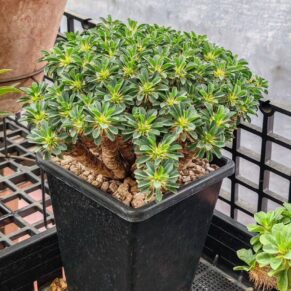
Explore hybrid possibilities or crested forms (e.g., Pachypodium horombense f. cristata) for an added dimension of uniqueness. llifle.com
15. Summary — Why You’ll Love Pachypodium horombense
In short: Pachypodium horombense offers an outstanding combination of beauty, resilience, rarity and sculptural form. It is not just a houseplant — it’s a living artwork. With its thick base, spiny arms, glossy leaves and bright yellow blooms, it commands attention. With proper care it will reward you year after year with stable growth, interesting form and seasonal displays.
Whether you’re a succulent novice or a seasoned collector, this species invites you to slow-down, observe nature’s adaptive genius, and cultivate something truly special.
Enjoy the journey with your Pachypodium horombense — it’s more than a plant, it’s a companion in your collection filled with character, challenge and reward.